Adolf Hitler
The Royal GameAdolf Hitler is presented as the political force whose expansion of National Socialist power turns Dr B’s discreet legal work into a target of surveillance and seizure. His regime’s pursuit of Church and imperial assets leads to Dr B’s arrest and imprisonment, where isolation and interrogations place the lawyer under pressure to reveal what he knows.
Political Expansion and the Targeting of Assets
Dr B recounts that his family’s legal practice managed assets for monasteries and members of the imperial family, and that its work acquired added political sensitivity when Hitler took power in Germany and began seizing Church and monastic property. Cross-border negotiations sought to rescue portable assets from confiscation. The firm’s trusted position also exposed it to secret dealings involving the Roman Curia and the imperial house.
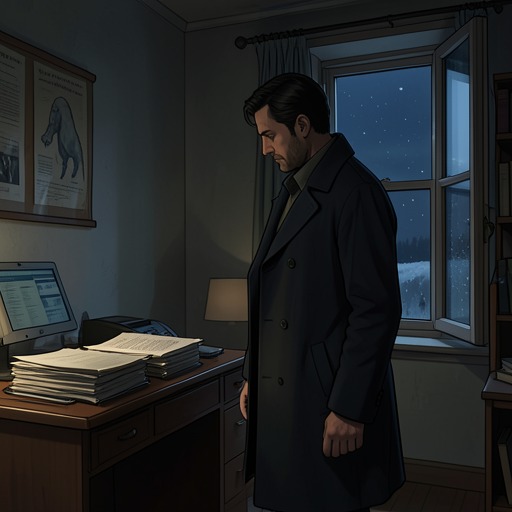
The practice protected its work through discretion: it had no sign on its door, and important correspondence and files were kept from a clerk who had been hired to give the office an ordinary appearance. Dr B later learned that this clerk had become an informant for National Socialist authorities. The surveillance network thus reached into the very office whose unobtrusiveness had been intended to shield it.
From Surveillance to Arrest
Dr B says National Socialists had established informants and listeners in ministries and businesses, including within Austria’s government. He believes the clerk’s growing eagerness to handle correspondence may have helped expose the practice to scrutiny, though he cannot say exactly what the clerk revealed. He also acknowledges that he did not recognize the danger in time.
The threat became immediate on the evening Schuschnigg announced his resignation, a day before Hitler marched into Vienna. Dr B was arrested by the SS. After hearing Schuschnigg’s farewell speech, he burned the most important papers; just before his door was broken down, he sent essential records concerning assets held abroad for monasteries and two archdukes to his uncle, concealed in a laundry basket carried by his housekeeper.
Detention and Interrogation
Dr B distinguishes his fate from that of prisoners sent to concentration camps. The Gestapo assigned him to a group from whom it hoped to obtain money or information, believing he could provide incriminating material about the monasteries and the imperial family, as well as access to assets kept beyond its reach. He was held in the Hotel Metropole, where detainees in this category received individual rooms rather than being sent to prison camps.
The apparent privilege of a private room was, in Dr B’s account, an interrogation method: strict isolation removed ordinary contact and distraction, leaving him alone with a few furnishings and his thoughts. After fourteen days, interrogators questioned him about transactions, banks, correspondence, and people connected to his work. Because he could not tell what the Gestapo already knew, each answer risked either exposing someone else or making his own denials appear suspicious. The uncertainty made the questioning continue in his mind after he was returned to his room.
Political Consequences and Narrative Significance
Dr B’s release followed an episode in which he attacked a warder and was taken for medical examination. A doctor later told him that he would not report the incident to the authorities, and Dr B says the doctor’s intervention achieved his release. He cannot know whether the Gestapo considered him mentally unfit or whether Hitler’s occupation of the Sudetenland made his Austrian case less important. His release required him to promise to leave his homeland within fourteen days.
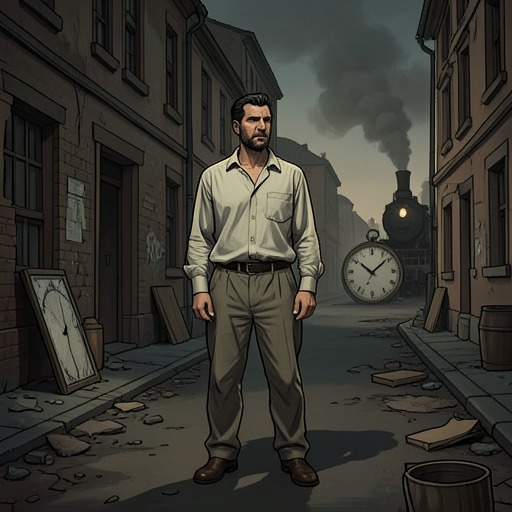
Hitler’s role in Dr B’s account is therefore structural rather than personal: the political expansion associated with him connects surveillance, asset seizure, arrest, and interrogation. The narrative also shows how the regime’s power operates through uncertainty. Dr B does not know what the informer disclosed or what the interrogators have learned, and that absence of knowledge turns him into his own relentless examiner. The account grounds political violence not only in arrest but in the machinery of monitoring and pressure that makes silence, denial, and disclosure perilous choices.